You remember the last time you Googled something and actually clicked a link? Probably not. More likely, you asked your phone a question and it just answered. No blue links. No scrolling. Just a voice telling you what to do.
That's the answer economy. And if your business isn't the one being spoken aloud, you're invisible.
What exactly is the answer economy?
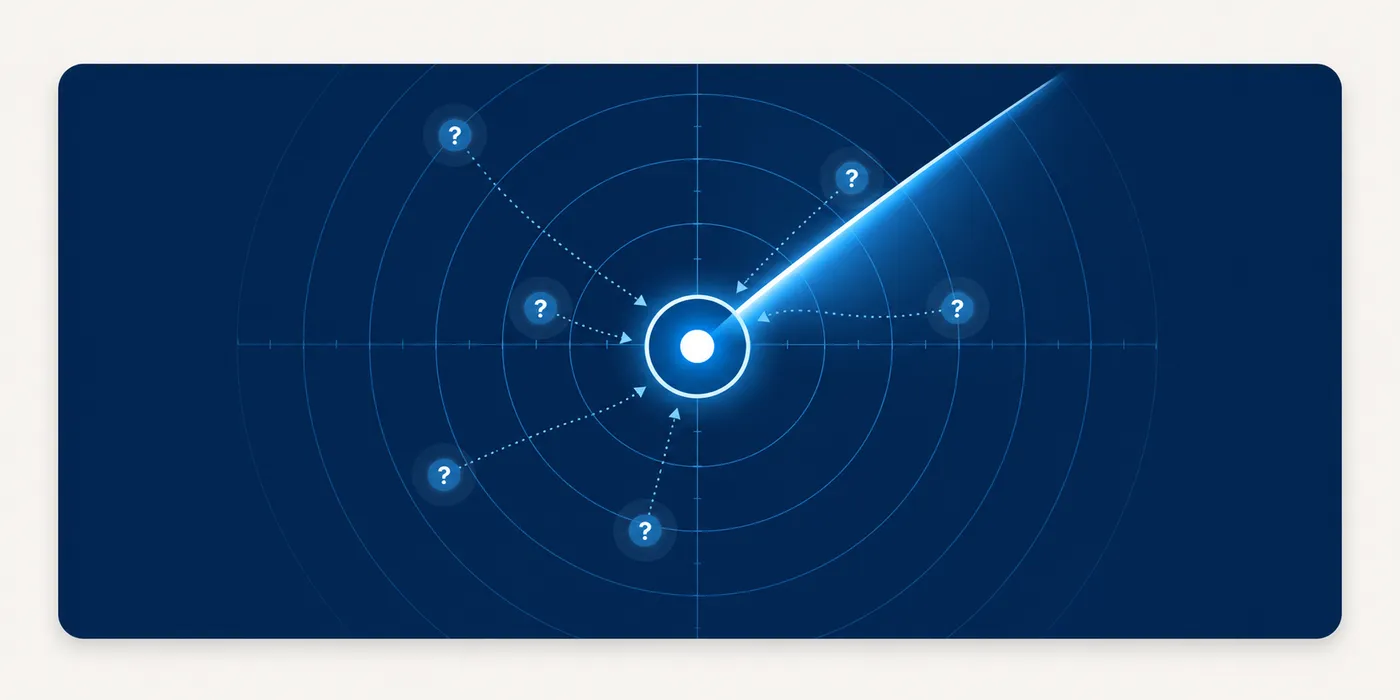
The answer economy is the shift from "search and choose" to "ask and receive." Instead of typing a query, getting ten links, and picking one, people now ask a question — through Siri, Alexa, Google Assistant, or even ChatGPT — and get a single, definitive answer. No alternatives.
Think about it: when you ask "Who's the best pizza place near me?" your phone doesn't read out ten options. It names one. Possibly two. That name gets the business. The other nine get nothing.
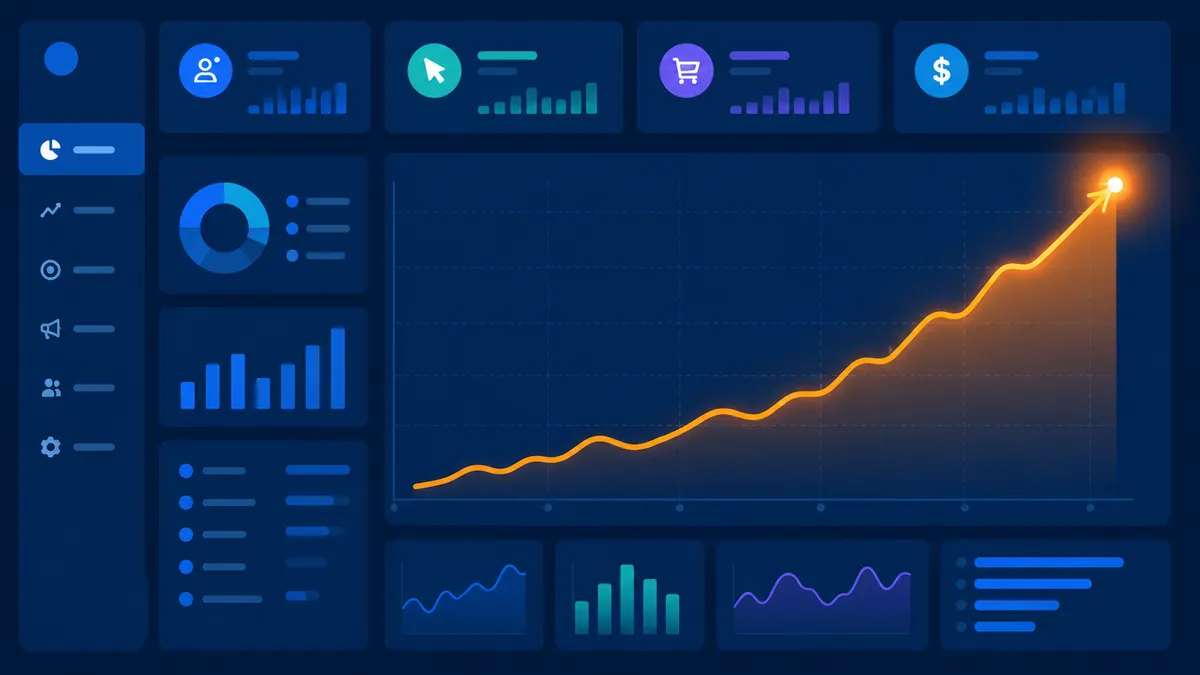
This isn't a small trend. Voice searches alone account for over 50% of all searches in many countries. And the AI answer boxes (featured snippets) now sit above every search result, often answering questions without a single click.
What this looks like on the ground in Ahmedabad
Picture a home baker on Sindhu Bhavan Road with genuinely great cookies and a loyal following among people who already know her. Someone visiting the area asks their phone for "best fresh-baked cookies near me." If her business details are inconsistent — an old address on one directory, no reviews synced to her Google Business Profile, a bio that says "DM for orders" instead of what she actually sells — the AI has nothing solid to recommend her on. It names a chain instead. Not because the chain is better. Because the chain is legible to the machine and she isn't.
That's the entire game in one sentence: being genuinely good is necessary but no longer sufficient. You also have to be machine-readable.
Why does it eat old-school SEO for breakfast?
Traditional SEO was about getting to the top of the blue links. You optimized pages, built backlinks, and hoped someone would click. The answer economy changes the goal completely. You don't need to rank #1 anymore. You need to be the answer.
If you rank #1 but the AI pulls a snippet from your competitor's FAQ page, you still lose. If your Google Business Profile isn't optimized, you're not the voice assistant's answer. If ChatGPT doesn't know you exist, you're missing an entire generation of customers who never open a search engine.
The five-question test: are you actually invisible?
Before you assume this doesn't apply to you, ask your own phone these five questions about your own business category, in your own city:
"Who's the best [your category] near me?"
"What's a good [your category] for [your specific use case]?"
"Is [your business name] any good?"
"Where can I find [your category] in [your area]?"
"Compare the top [your category] options in [your city]."
If your name doesn't come up in at least two or three of those, you're not slightly behind. You're not in the game at all — because these engines answer with confidence whether or not you exist, and they will happily recommend your competitor instead of admitting they don't know.
What an AEO audit actually finds
"Audit" sounds abstract until you see the categories of problems it usually turns up, in roughly this order of frequency:
Fact inconsistencies. The same business listed with three different addresses, two different phone numbers, or a name spelled two different ways across Google, Facebook, Justdial and its own website. Machines treat this as a trust signal in reverse — inconsistency reads as unreliability.
Missing or thin structure. No schema markup telling search engines what the page actually is (a local business, a service, a product), so the page has to be interpreted rather than simply read.
FAQ content that answers questions the way a brochure would, not the way a person actually asks out loud — "Our Services" instead of "How much does this cost?" phrased in full sentences.
A proof gap. Few or old reviews, no recent activity on the Google Business Profile, nothing recent enough for an AI to treat as current and trustworthy.
Every one of these is fixable, and none of them require rebuilding the website from scratch — which is usually the relief part of the conversation once a business sees the list.
How do you win in the answer economy?
You stop thinking like a website owner and start thinking like an answer provider. Every question your customers ask is an opportunity to be the only voice they hear. That means:
Structuring your content so machines can read it easily (schema markup).
Building a Google Business Profile that screams relevance and trust.
Creating FAQ pages that answer questions exactly the way people ask them — conversationally, in full sentences.
Getting your brand mentioned in the datasets that AI models train on.
Fixing the boring stuff first — the address, the hours, the category — because AI systems cross-check these facts across multiple sources before they'll trust you enough to recommend you.
Where most businesses go wrong trying to fix this themselves
The usual first move is buying more ads or asking someone to "do some SEO." Both miss the point. Ads get you a paid slot; they don't make an AI assistant trust you enough to say your name unprompted. And "some SEO" from five years ago was built entirely around ranking links, not around being cited as a spoken or written answer — different goal, different mechanics, largely different work.
The second most common mistake is fixing only the website and ignoring everything else the AI cross-references — directory listings, review platforms, the Google Business Profile, social bios. An AI assistant that finds three different addresses for the same business across the web doesn't pick one and move on. It gets cautious, and caution looks like recommending someone else instead.
What the fix actually looks like, in order
This isn't a redesign project. It's closer to an audit followed by deliberate repair, in this order: first, the facts (address, hours, category, name spelled the same way everywhere); second, the structure (schema markup, FAQ content written the way people actually ask questions out loud); third, the proof (reviews, ratings, and mentions an AI can find and trust); fourth, ongoing monitoring, because these platforms change their answers as new information appears, not once and done.
How this fits with the SEO or ads you're already running
None of this means throwing out what you already have. Traditional SEO still matters for the searches that do still produce a list of links rather than a single spoken answer, and paid ads still buy you a placement no amount of AEO work can substitute for. What changes is the order of priority: a business that has great ads and no AEO foundation is buying visibility it has to keep renewing, while a business that fixes its answer-economy fundamentals earns a form of visibility that compounds and doesn't switch off the day the ad budget pauses. The two are complementary, not competing — but if you can only fix one thing first, fix the one that costs nothing to keep once it's built.
Quick FAQ:
Does this replace my Google Ads spend?
No — AEO earns you the unpaid, spoken answer; ads buy you a paid placement alongside it. Most businesses eventually want both, but they solve different problems and shouldn't be confused with each other.
How is this different from "local SEO"?
Local SEO historically optimized for a ranked list of ten blue links. AEO optimizes for the single answer a voice assistant or AI overview gives, which is a narrower, higher-stakes target — there's no page two to fall back on.
Can a small business realistically compete with a big chain on this?
Often, yes — more easily than in traditional SEO, in fact, because AI assistants weight recency, consistency and genuine local relevance heavily, and a chain's generic, one-size-fits-all listing doesn't automatically win those signals the way a large ad budget wins a paid placement.
How long this honestly takes
The factual fixes — correcting addresses, unifying your name across directories, filling in a bare Google Business Profile — can happen within days once someone sits down and does the unglamorous work of finding every place your business is listed. The structural work — schema markup, FAQ content rewritten the way people actually ask — usually takes a few weeks to do properly rather than rushed. The proof layer — a healthier flow of recent, genuine reviews — is the slowest piece, because it depends on real customers doing something in the real world, not just on work happening behind the scenes. Anyone promising you'll dominate every voice answer in your category within a week is selling something other than AEO.
The future is spoken.
The answer economy isn't coming — it's here. The only question is whether your business will be the answer, or just another forgotten link. We help businesses become the answer across every platform. See exactly how we run this process. Ready to stop being invisible? Let's talk.
Your move
Want to know if your business exists in the answer economy? Ask Siri who's best in your industry right now. Then call us and we'll change the answer.