Your brand isn't your logo. It isn't your color palette, your tagline, or the font you chose. Your brand is a feeling. A memory. A gut reaction. And most businesses treat it like an afterthought.
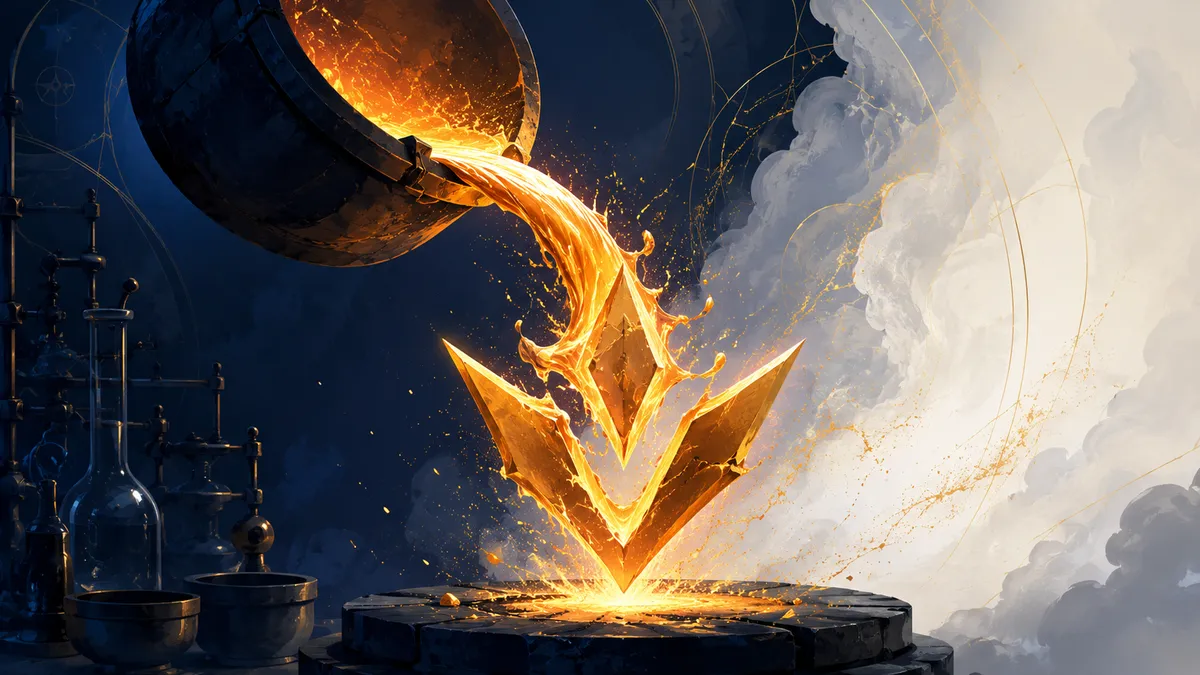
We call what we do "Brand Alchemy." Not because it's fancy, but because it's transformation — turning something ordinary into something so valuable it becomes unforgettable.
The old model: Identity as a checklist
Most branding projects go like this: make a logo, pick some colors, write a mission statement, and put it in a PDF. Congratulations, you now look like everyone else in your industry. That's not branding. That's decorating.
The old model assumes that if you look professional, people will trust you. But trust doesn't come from looking neat. It comes from consistency, personality, and the ability to make someone feel something instantly.
The new model: Brand as a living thing
Brand Alchemy treats your brand as a living, breathing entity with its own character, voice, and behavior. Just like a person, a brand can be charming, boring, magnetic, or forgettable. Our job is to find the soul of your business and amplify it until it becomes unmistakable.
We use brand archetypes — the timeless personality patterns that humans recognize instantly. Are you the Hero? The Sage? The Rebel? Once we know, every visual, every word, every interaction aligns with that personality. There's no more guesswork.
Why archetypes work when mission statements don't
A mission statement is written once, filed away, and rarely read by an actual customer. An archetype is different — it's a personality pattern people already recognize unconsciously from decades of stories, film and advertising, which means you don't have to teach a customer to feel something about your brand. You only have to consistently show them which familiar personality you are.
A quick tour of the pattern set that branding borrows from psychology: the Hero (overcoming, winning, proving something), the Sage (knowledge, clarity, teaching), the Caregiver (protection, reassurance, service), the Outlaw or Rebel (breaking rules on purpose), the Creator (originality, craft), the Explorer (freedom, discovery), the Innocent (simplicity, optimism), the Magician (transformation, "how did they do that"), the Ruler (authority, control, premium), the Jester (humour, irreverence), the Lover (intimacy, desire, aesthetics), and the Everyman (belonging, relatability). None of these is "better" in the abstract — the right one is whichever genuinely matches what your business already does well and who it actually serves, which is why this starts with excavation, not a brainstorm of adjectives that sound nice.
Why some brands stick and others disappear
Think about the brands you can't forget. They probably make you feel something — confidence, excitement, comfort. They show up consistently. Their voice is unique. You could recognize their design even without the logo.
Now think about the brands that all blend together. They use the same corporate language, the same stock photos, the same "innovative solutions" tagline. They're wallpaper. And you don't remember wallpaper.
What "consistency" actually costs a generic brand
Inconsistency isn't just an aesthetic problem — it's an expensive one. A brand that looks and sounds different across its website, its Instagram, its ads and its packaging forces every new customer to re-learn who you are each time they encounter you, which means every touchpoint starts from zero instead of building on the last one. A consistent brand compounds: the fifth time someone sees your ad, they already half-recognize you, so it works harder than the first. A generic or inconsistent brand never gets that compounding effect, no matter how much is spent on media.
What a Brand Alchemy engagement actually produces
Strip away the metaphor and the deliverables are concrete: a defined archetype and personality brief; a voice guide specific enough that two different writers produce copy that sounds like the same brand; a visual identity system — not just a logo, but the rules for how it's used, alongside colour, type and imagery guidelines; and a set of behaviour guidelines covering how the brand responds in situations a style guide alone doesn't cover, like a customer complaint or a competitor's move. Together, these are what a designer or copywriter reaches for on day one of any new piece of work, instead of reinventing your brand's personality from scratch each time — which is exactly how brands drift into sounding like five different companies depending on who wrote the caption that week.
Signs it's actually time to look at this
A handful of symptoms tend to show up together when a brand has drifted into wallpaper territory: the business wins customers mainly on price or existing relationships rather than on being recognizably preferred; different people on the team describe "who we are" in noticeably different words when asked; marketing materials get redesigned every year or two not because of a strategic reason but because nobody was ever fully happy with the last version; and a competitor with a similar or even inferior product is somehow the one people mention first. None of these individually proves a branding problem, but two or three of them together usually do.
How this connects to being found in the first place
A distinctive brand doesn't just look better — it performs better on the other four weapons too. A generic description is genuinely harder for an AI assistant to distinguish from ten competitors offering the same generic description, which makes Brand Alchemy quietly load-bearing for AEO and GEO as well: the more specific and consistent your brand's actual personality and language, the easier it is for both humans and machines to tell you apart from everyone using the same "innovative solutions" phrasing.
Quick FAQ
Do I need a full rebrand, or can this work with what I already have?
Most engagements start with what already exists and find the real signal buried in it, rather than discarding everything — a full rebrand from zero is the exception, not the default.
How long does finding "the archetype" take?
It depends on how much clarity already exists about who the business serves and why customers actually choose it over alternatives; that clarity, or the lack of it, is usually the real time factor, not the archetype exercise itself.
Can two competitors in the same category both use the same archetype?
In theory yes — but in practice the specific details underneath the archetype (the exact voice, the exact visual language, the exact story) are what actually differentiate two Hero brands or two Sage brands from each other, so a shared archetype rarely produces a shared identity once the real work is done properly.
Will this make my brand look like everyone else's "brand story" content?
The opposite is the goal — a genuinely specific archetype, grounded in what your business actually does differently, is what prevents the generic result this page is arguing against in the first place.
What if my team disagrees internally about who we are?
That disagreement is normal, and usually more useful surfaced than smoothed over early — it's often exactly the raw material the excavation phase needs, since the gap between how different people inside a business describe it is frequently the same gap customers are quietly noticing from outside.
What we actually need from you to start
The excavation phase depends on candour more than paperwork. The useful inputs are usually: honest answers about who genuinely buys from you today versus who you assumed you were targeting; the moments customers have specifically praised, in their own words, not paraphrased by the team; a clear-eyed look at two or three competitors and what, if anything, actually separates you from them beyond price; and whatever existing brand material already exists, even if it's inconsistent, since inconsistent material still contains real signal about what's been tried and what hasn't landed. None of this requires a big internal project — usually a couple of honest conversations surface most of it.
Why this isn't a one-time project either
A brand system isn't a plaque you mount once and forget. New products, new markets, new team members writing copy — all of it tests whether the system actually holds up under real use or was only ever a nice-looking document. The difference between a brand that stays distinctive for years and one that quietly drifts back into wallpaper is usually whether anyone keeps checking new work against the system, not whether the original system was good.
That's also why a brand system needs to be usable by people who weren't in the room when it was built. A guide only the original team can interpret correctly isn't finished — the real test is whether a new hire, a freelance designer, or an outside agency can pick it up and produce something on-brand without a long briefing call every single time.
The result isn't a logo. It's a psychological signature. One that triggers recognition, trust, and desire. See how we build that signature.
YOUR MOVE
Think your brand might be wallpaper? Show it to us. We'll tell you honestly. Book a brand audit.
Your move
Think your brand might be wallpaper? Show it to us. We'll tell you honestly. Book a brand audit.